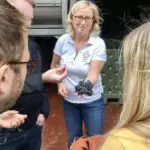


If there is one recurring question on my wine tours, it is about icewine (Eiswein in German). Having grown up in Germany and spent decades enjoying German wine, I was surprised by this interest. Until the launch of my wine tour business, I had never tasted Icewine myself. I perceived it as a freak wine: quite rare, very expensive, and, due to its sweetness, one that should be opened only on the most special occasions.
However, I have now tasted icewine several times, both as a young wine and as a mature wine – and it is absolutely delicious. I have come to appreciate that icewine can only be made when a number of special conditions align, making these occasions increasingly rare.
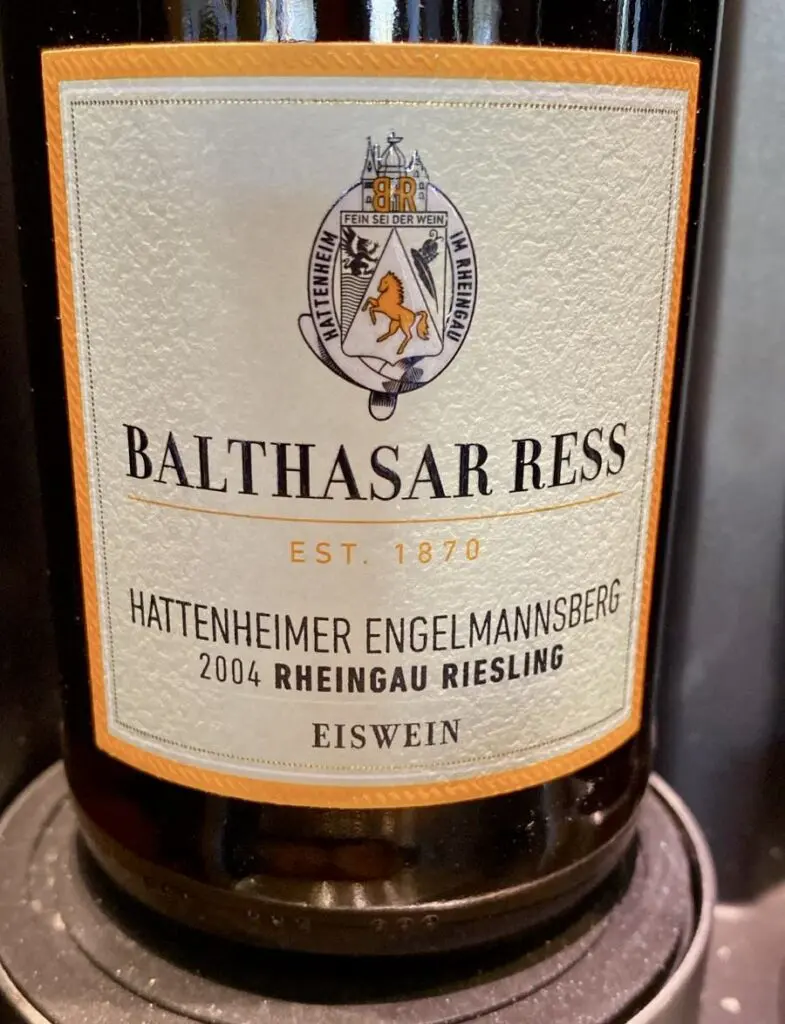
Do you have questions about Icewine? Here are eight answers to your icewine (Eiswein) questions!
Yes, Icewine is made from frozen grapes!
In Germany, icewine production is regulated by German wine laws, which stipulate that grapes must be harvested and pressed while frozen, at temperatures between -7 to -12 degrees Celsius. This means the harvest of icewine typically takes place in November, December, and sometimes even as late as January of the following year. The must from the frozen grapes is extremely concentrated, as ice crystals in the flesh will hold back water and allow for syrup to be extracted.

Yes, the best icewine is made from Riesling
Riesling, as a grape varietal, has a very long maturation period, allowing it to slowly develop the elements of a great wine. In addition to building sugars during its maturation process, it also develops acidity. A balance of both is essential to eventually create a harmonious wine.
Correct, icewine is also made in Canada and other countries
In fact, Canada’s icewine production is even larger than Germany’s. Still, we were the pioneers! German-style icewine production is well documented as beginning on February 11, 1830, in Dromersheim in our beloved Rheinhessen wine region, where the world’s first icewine was produced.
No, Icewine is actually very low in alcohol
In the realm of dessert wines, Icewine has one of the lowest alcohol contents, typically around 7% ABV. This is similar to Tokaji and Trockenbeerenauslese. Other famous dessert wines, such as Port, Madeira, and Sherry, are fortified, receiving a shot of high-ABV alcohol during the production process, which ends fermentation and stabilizes the wine at typically 16-19% ABV. Due to the extraordinarily high sugar content in the must, icewine ferments slowly, reaching a maximum of 7% alcohol.
Absolutely, Icewine is very expensive
Many factors contribute to the high price of icewine: yield, risk, labor, and bottle maturation time, but first and foremost, it is its stunning taste. To produce one bottle of icewine, a winemaker needs to reserve grapes equivalent to 12-15 bottles — healthily preserved on the vine. To protect the grapes from pests, animals, and curious humans, they are individually wrapped on the vine. If nature is gracious enough to provide that -7°C frost for at least seven hours, the harvesting crew will rise early, hand-harvest the frozen treasures, and rush them to the press. Once the syrup is extracted, fermentation can take months or even years to complete. Finally, another decade of bottle maturation may be recommended for the delightful flavors to fully develop.

How does Icewine tastes like…?
I once heard a Dutch guest say it tasted like “an angel peed on your tongue.” In a more prosaic way, I would describe the flavor profile as very concentrated fruit with notes of butterscotch and caramel—a multilayered candy offered by nature, or condensed winter sunshine.
I would have icewine with…
…nothing else! Enjoy it on its own, instead of a dessert. A small dose is sufficient, and it’s simply gorgeous without any food pairing.
Where to taste icewine
Given all the efforts that go into icewine production and its price tag, icewine tastings are rarely offered at high-end wineries. Still, it’s worth asking, as sometimes a bottle may have been opened for a special tasting and, with a bit of luck, you may get a sip to taste. Alternatively, you can speak to us at BottleStops – we occasionally know of opportunities for tastings, or we can organize an icewine tasting just for you and your group.